DNA Testing
What to Expect During a Paternity Test: Legal vs. Informational Testing
A clear walkthrough of how paternity testing works, the difference between legal and informational results, and how to prepare for your appointment.
Deciding to schedule a paternity test often comes with questions about the process itself — what happens at the appointment, how long results take, and whether the result can be used for legal purposes. Understanding the difference between legal and informational testing before you book helps you choose the right option the first time.
The most important decision: legal or informational
Before anything else, decide how the result will be used. A legal (chain-of-custody) paternity test is required when results may be used for court proceedings, custody matters, child support, immigration, inheritance claims, or another official purpose. An informational test is intended for personal knowledge only and is not built for legal use because it does not include the identity verification and witnessed collection a court requires.
Switching from an informational test to a legal one after collection usually isn't possible without a new appointment, so confirm the purpose of the test before you schedule.
How the collection actually works
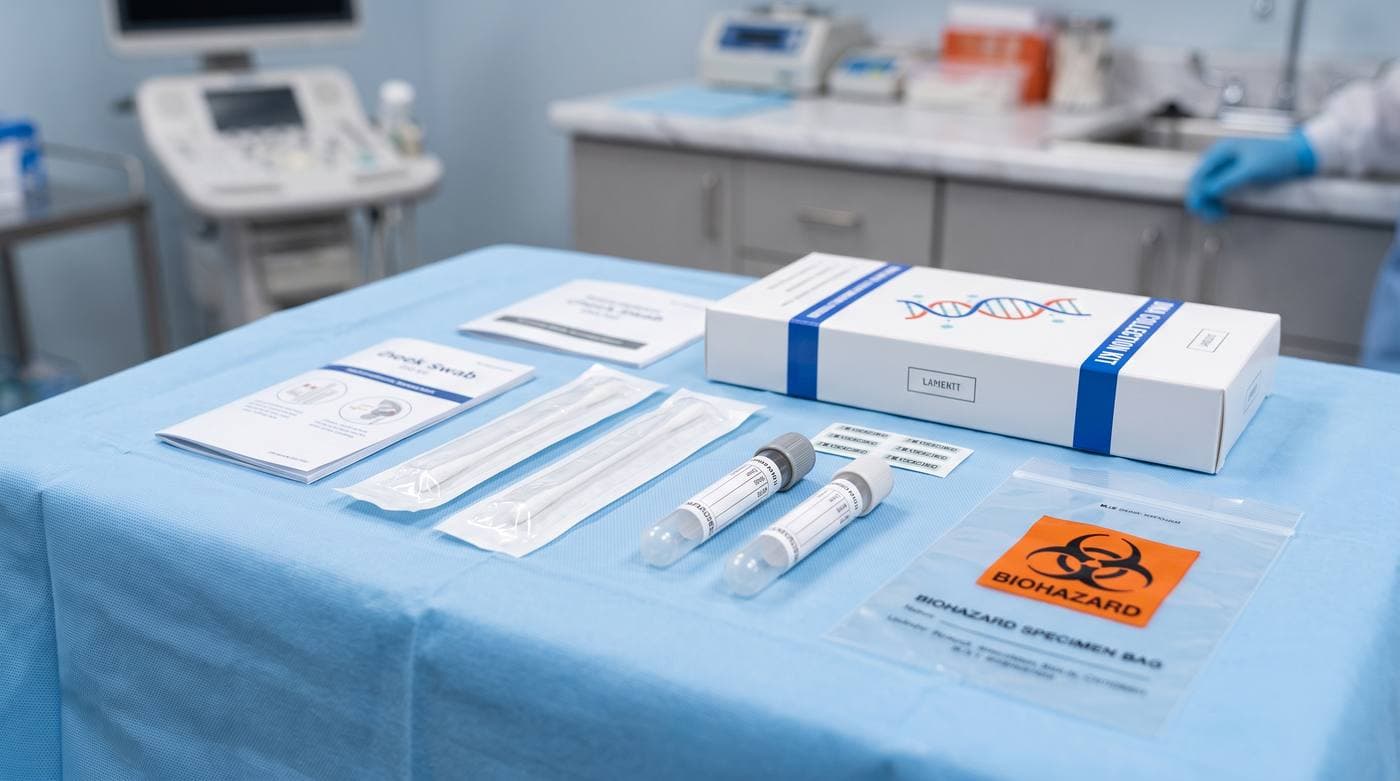
Both legal and informational paternity tests use the same basic sample: a cheek swab collected from each tested person. The swab is brushed gently against the inside of the cheek for a short time, and the process is non-invasive for adults and children alike.
The difference is in the surrounding process. A legal test requires verified government-issued photo identification for each adult participant, a witnessed collection performed by a neutral third party, and a documented chain of custody from collection through laboratory analysis. An informational test is handled privately without those additional verification steps.
Who needs to be tested
A standard paternity test compares DNA from the alleged father and the child. Including the mother's sample is optional but can increase the statistical confidence of the result. For legal tests, every participating adult should bring identification, and minors generally need a parent or legal guardian present to provide consent and attend the collection.
What to bring to your appointment
- A valid, current government-issued photo ID for every adult being tested (required for legal testing).
- Any court order, attorney instructions, or agency paperwork related to the test.
- Information about who else needs to be tested and whether they will attend together or separately.
How long results take
Turnaround time is typically a few business days after all required samples are collected and received by the laboratory, though timing can vary. If you have a court deadline or another time-sensitive requirement, share that when you schedule so expectations are clear from the start.
Privacy and result delivery
Paternity testing involves sensitive personal information, and a responsible provider should explain exactly how your result will be delivered and who is authorized to receive it before your appointment — especially for legal tests tied to a court or agency process.
PureCheck offers both legal and informational paternity testing at its Metairie collection facility, with guidance on which option fits your situation before you book.