
Background Checks
What Shows Up on a Background Check? A Plain-English Guide
A clear breakdown of what employment and tenant background checks typically include, what generally does not appear, and how to prepare before one is ordered.
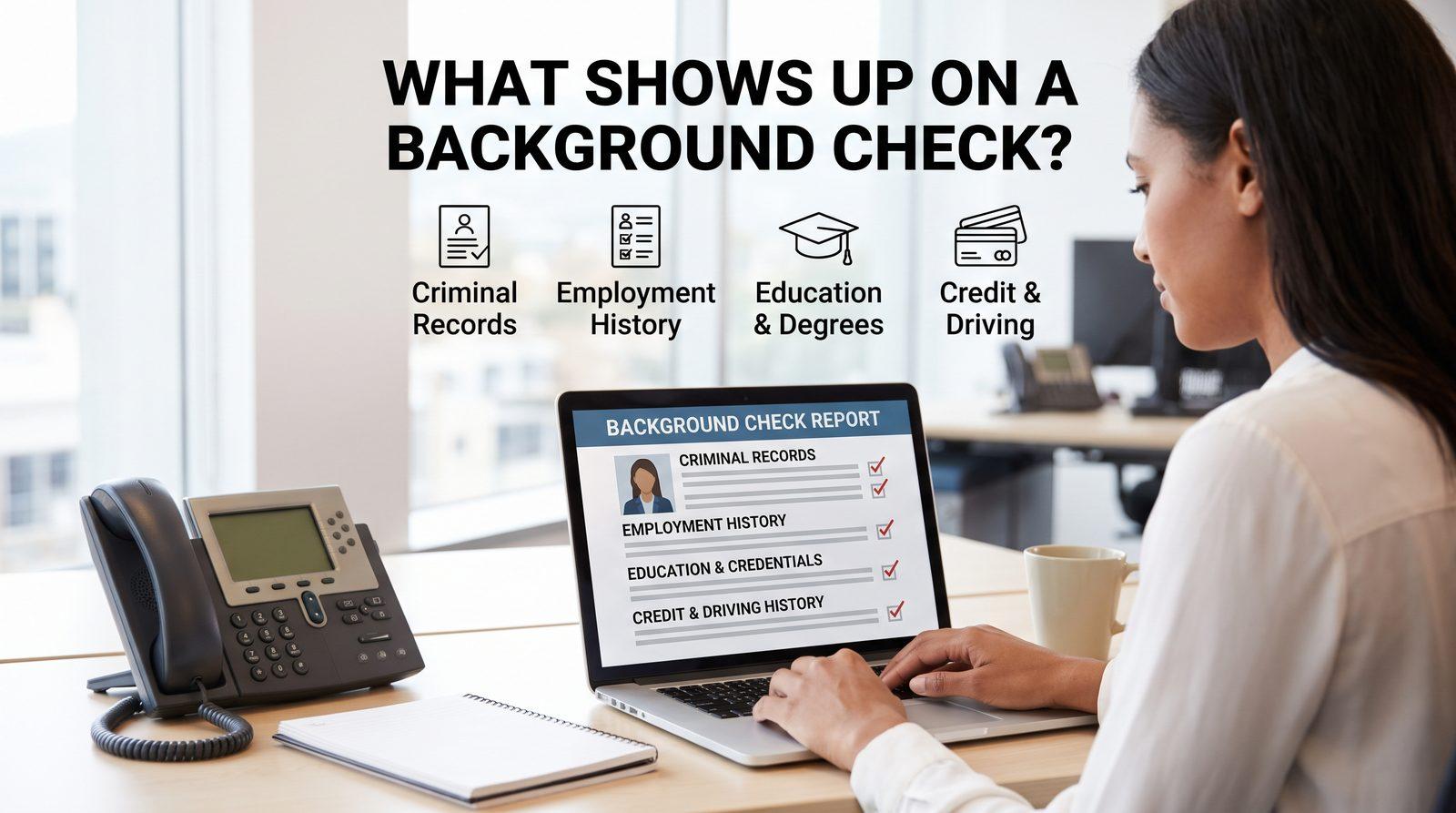
Whether you're applying for a job, signing a lease, or ordering a check on someone else's behalf, "what actually shows up" is usually the first question people ask. The honest answer is that it depends on what was ordered — a background check is not one single report, but a combination of searches chosen to fit the situation.
The building blocks of a typical background check
Most employment or tenant background checks are built from some combination of the following components:
- Identity verification and Social Security number trace — confirms the name, addresses, and identifiers associated with a person.
- Criminal record search — county, state, and/or federal searches for criminal history, depending on where the person has lived.
- Motor vehicle record (MVR) — driving history, often required for roles or situations involving driving.
- Employment and education verification — confirms past employers, job titles, dates, and degrees or certifications claimed.
- Sex offender registry and watchlist checks — screens against publicly available registries where applicable.
Not every report includes every item above. A landlord screening a tenant application may focus on identity, criminal history, and eviction records, while an employer hiring a delivery driver may add an MVR check that a typical office-hire report would not include.
What generally does not appear
A few categories of information are either excluded by law in most reporting contexts or require separate, specific authorization:
- Medical records and health information are not part of a standard background check.
- Credit history generally requires separate authorization and disclosure, and is handled differently from criminal or identity searches.
- Certain older or sealed records may be excluded depending on applicable law and the type of report ordered.
- Arrests that did not lead to a conviction are treated differently across jurisdictions — some reporting rules limit how this information can be used or reported.
Because rules vary by state and by the purpose of the report, anyone ordering or relying on a background check should confirm current requirements with qualified counsel rather than assuming the same rules apply everywhere.
Why two reports on the same person can look different
It's common for someone to assume a background check is a single, universal record — but results can vary based on which searches were ordered, which counties or states were searched, and how recently records were updated at the source. A national criminal database search is not the same as a county-level courthouse search, and the two can return different results depending on where records are maintained.
How to prepare before a background check is ordered
A little preparation on the front end reduces delays:
- Make sure your legal name, date of birth, and current address are accurate and consistent wherever you provide them.
- List every address where you've lived in the past several years if asked — incomplete address history is one of the most common causes of delay.
- If you have a common name, be ready for additional verification steps to confirm which records actually belong to you.
- If you believe a report contains inaccurate information, most situations allow you a reasonable opportunity to respond before a final decision is made — ask the requesting party about that process.
What to expect as a timeline
Turnaround time depends heavily on which searches were ordered and where records are held. Identity verification and database searches can often be completed quickly, while county courthouse searches and third-party verifications (like a past employer confirming dates of employment) can take longer, especially if a human has to respond on the other end.
Questions worth asking
- Which specific searches are included in this report — identity, criminal, MVR, employment, education?
- Which jurisdictions or counties are being searched?
- What is the expected turnaround time?
- What is the process if something in the report needs to be corrected or disputed?
PureCheck provides background check and identity verification services for employers and individuals across Metairie and the New Orleans metro, and can walk you through exactly what's included in a given report before it's ordered.