Alcohol Testing
PEth Alcohol Testing: What It Detects and Who Needs It
Learn how PEth (phosphatidylethanol) blood spot testing works, its 2-4 week detection window, and how it compares to breath and urine alcohol tests.
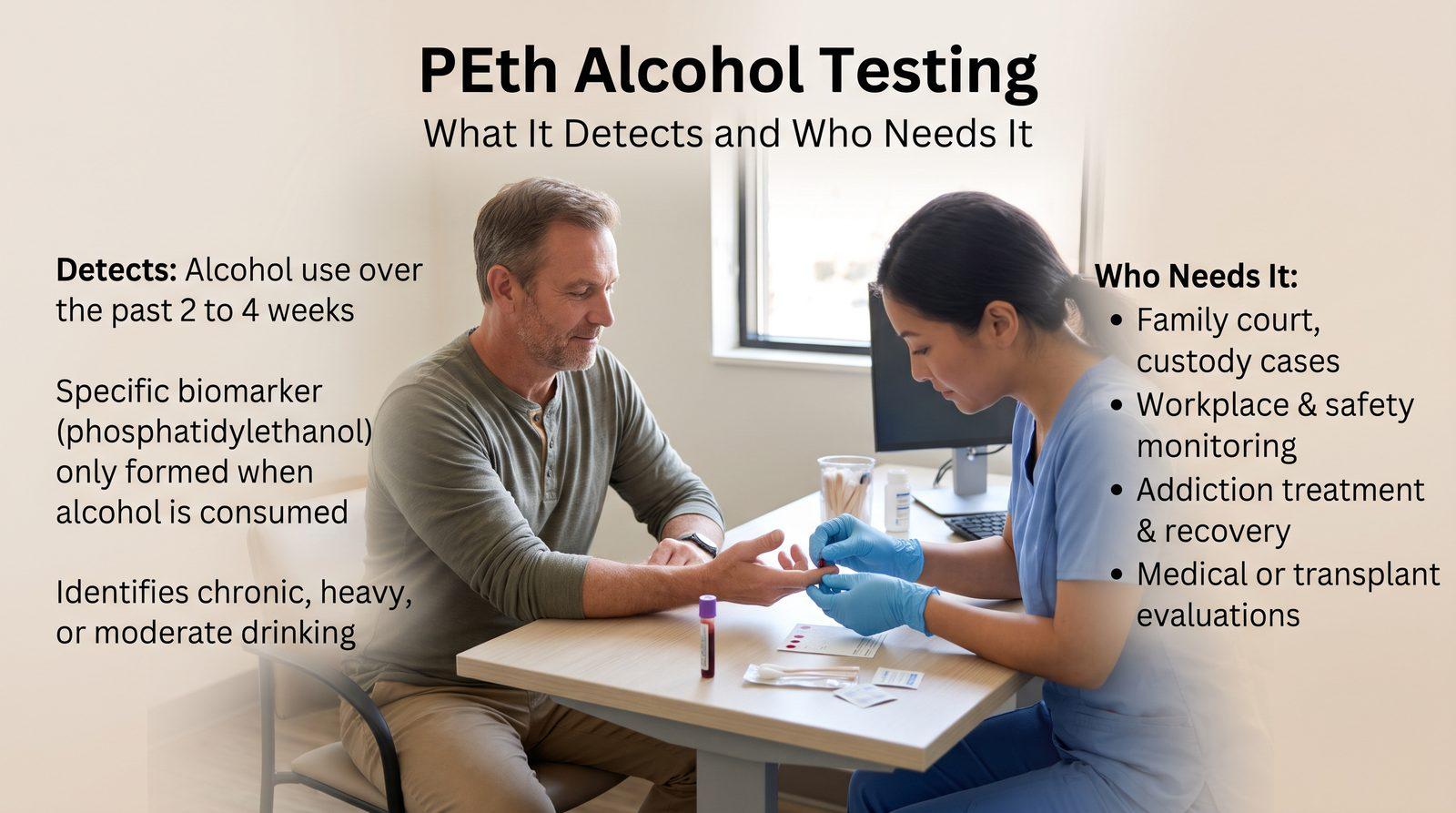
Most alcohol tests answer one narrow question: has this person had a drink in the last several hours? PEth testing answers a different one — has this person consumed alcohol at any point over the past few weeks? That longer window is what makes PEth testing useful for monitoring programs, courts, and treatment settings that need a clearer picture of a person's drinking pattern over time.
What PEth testing measures
PEth stands for phosphatidylethanol, a group of compounds that form in the body only when alcohol is present. Because PEth is produced directly from alcohol consumption rather than measuring current impairment, it functions as a direct biomarker rather than an indirect indicator. A small blood sample is collected and dried onto a specialized card (a blood spot), then sent to a laboratory for analysis.
How far back does PEth testing look?
PEth testing generally provides a detection window of about 2 to 4 weeks, depending on the amount and frequency of alcohol consumed. This is substantially longer than a standard breath test, which reflects alcohol consumption within roughly the past several hours, or a standard urine alcohol test, which typically covers a much shorter window than PEth.
PEth vs. EtG vs. breath alcohol testing
These three methods are often confused because they are all used to detect alcohol, but they are not interchangeable:
- Breath alcohol (BAC) testing measures current impairment and reflects very recent consumption — useful for real-time sobriety checks.
- EtG (ethyl glucuronide) urine testing can detect alcohol use typically within the past few days, depending on the cutoff level used and the amount consumed.
- PEth blood spot testing reflects a longer pattern of use, typically 2 to 4 weeks, making it better suited to monitoring overall consumption trends rather than a single recent drinking episode.
If a court, employer, or treatment program has specified a particular method, use exactly what was requested rather than assuming one test can substitute for another — each one is answering a different question.
Who typically orders PEth testing
PEth testing comes up most often in situations where a longer-term pattern matters more than a single point-in-time result:
- Courts and probation programs monitoring alcohol abstinence over weeks or months.
- Treatment and recovery programs tracking progress between appointments.
- Employers in safety-sensitive industries running periodic compliance checks.
- Individuals who want documented proof of abstinence for a legal, custody, or personal matter.
What to expect at collection
Collection is quick and minimally invasive: a small blood sample is collected and applied to a specialized card designed for stable transport to the laboratory. Because this is a lab-based test rather than an instant read, results take longer than a breath test — ask your provider for the current turnaround time when you schedule.
A few things PEth testing does not tell you
PEth results indicate that alcohol was consumed within the detection window, but they do not specify the exact date, time, or amount consumed within that window. If precise timing matters for your situation, discuss that with whoever requested the test so expectations are clear before you order it.
Questions to ask before you schedule
- Has the requesting court, employer, or program specifically asked for PEth testing, or would a different method satisfy the requirement?
- What detection window does my situation require?
- What is the current turnaround time for results?
- How will my results be reported, and to whom?
PureCheck offers PEth blood spot testing alongside breath and urine alcohol testing, so you can confirm which method matches your program's requirements before your appointment.